Florida Butterfly Photos - Brushfoots
by Will Cook
Here's a selection of Lepidoptera images from a trip to south Florida, June 22-29, 2010. All photos were taken using a Panasonic Lumix DMC-FZ50, most with the addition of a Sony VCL-M3358 close-up lens.
Papilionidae and Pieridae | Lycaenidae | Nymphalidae | Hesperiidae | Moths
Nymphalidae - Brushfoots
Danainae - Milkweed Butterflies
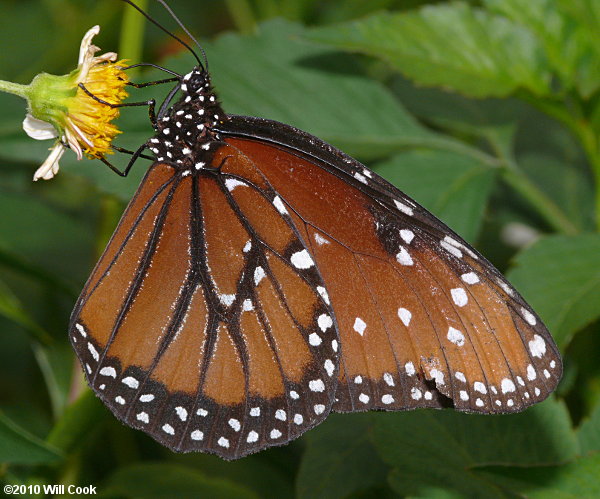
| Queen (Danaus gilippus) |
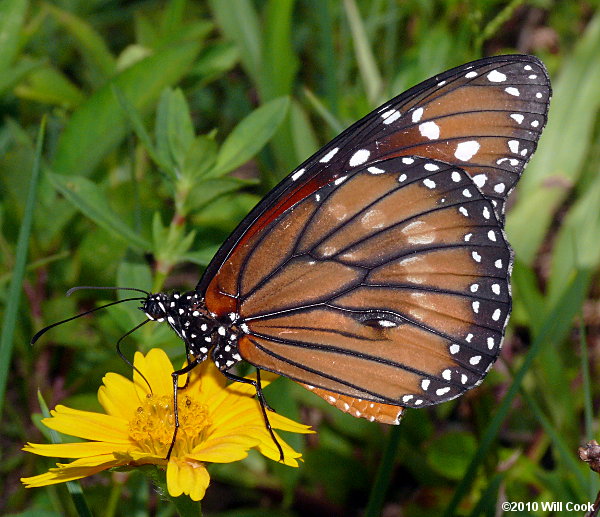
| Soldier (Danaus eresimus) |
Heliconiinae - Longwings
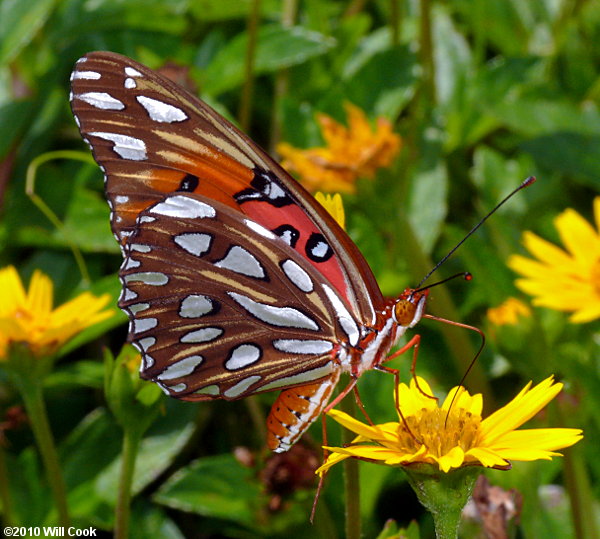
| Gulf Fritillary (Agraulis vanillae) Gulf Fritillary is one of our most spectacular butterflies. The undersides are brownish with yellowish streaks and many large silvery-white spots. |
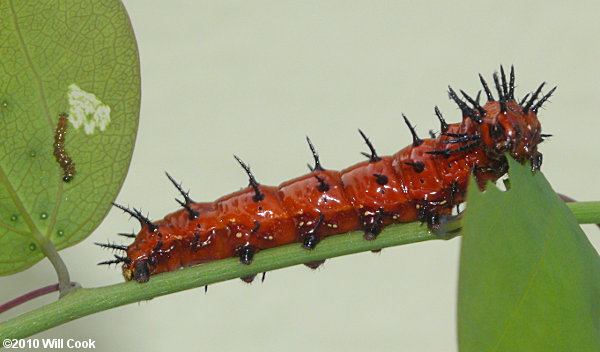
| Gulf Fritillary (Agraulis vanillae) Gulf Fritillary caterpillars feed on various species of passionflower (Passiflora). There are actually two caterpillars in the photo at left — look closely! |
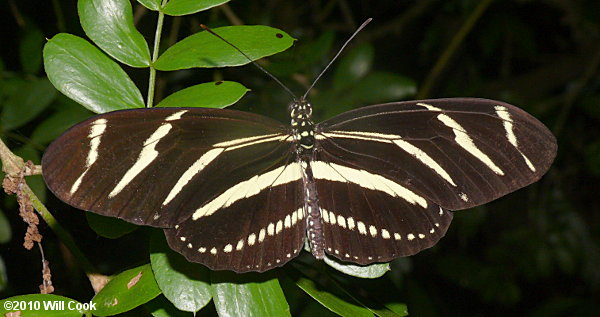
| Zebra Heliconian (Heliconius charithonia) |
Nymphalinae - True Brushfoots
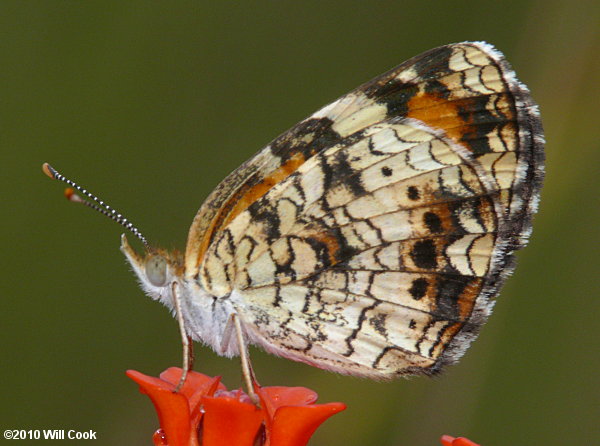
| Phaon Crescent (Phyciodes phaon) |
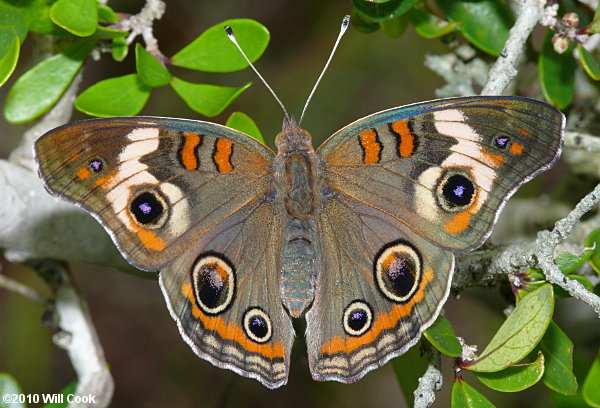
| Common Buckeye (Junonia coenia) |
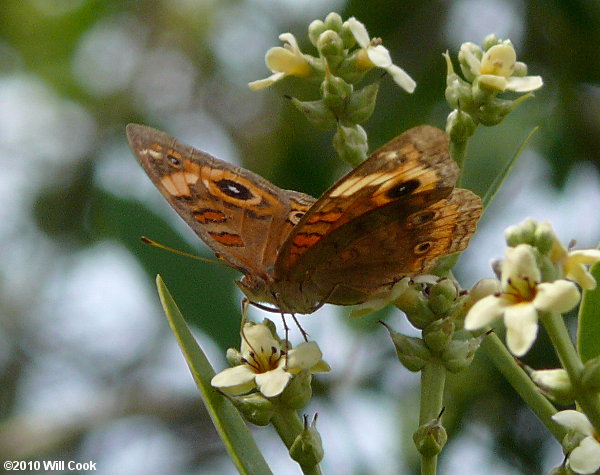
| Mangrove Buckeye (Junonia evarete) This one is nectaring on its host plant, Black Mangrove (Avicennia germinans). |
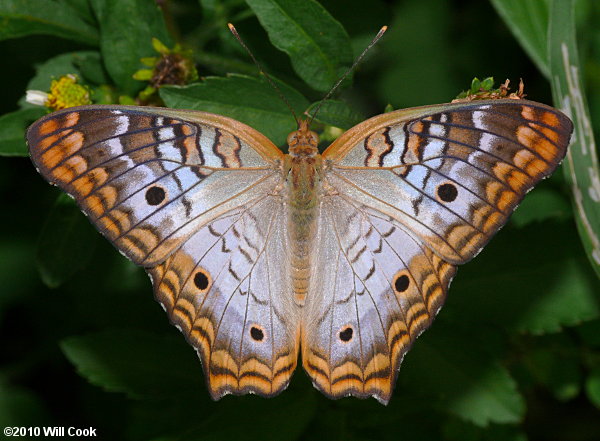
| White Peacock (Anartia jatrophae) |
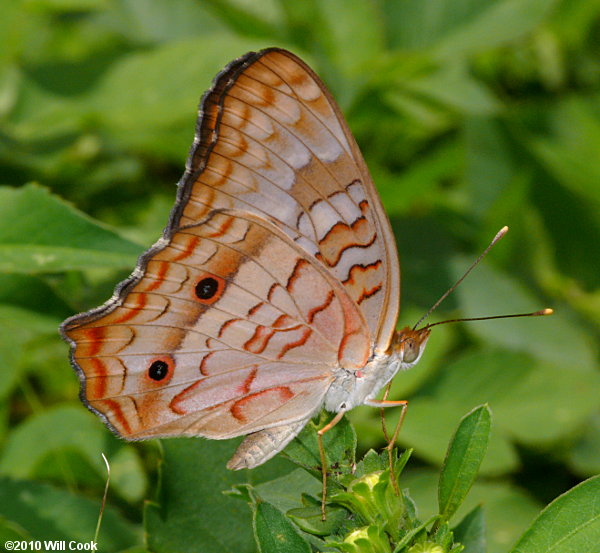
| White Peacock (Anartia jatrophae) A stunningly-patterned fresh individual, the most colorful one I've seen. |
Limenitidinae - Admirals and Relatives
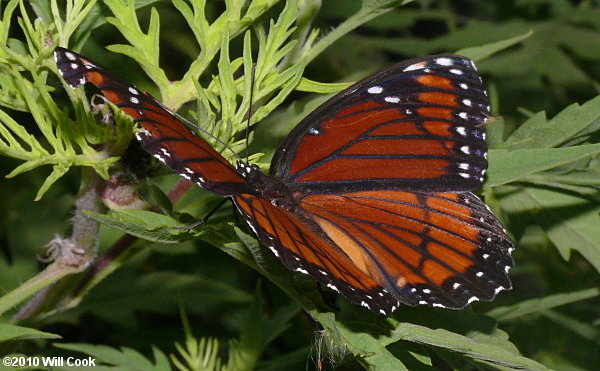
| Viceroy (Limenitis archippus) Viceroys in southern Florida are brownish, resembling the Queen butterfly, which is more common than the Monarch here, but equally toxic. |
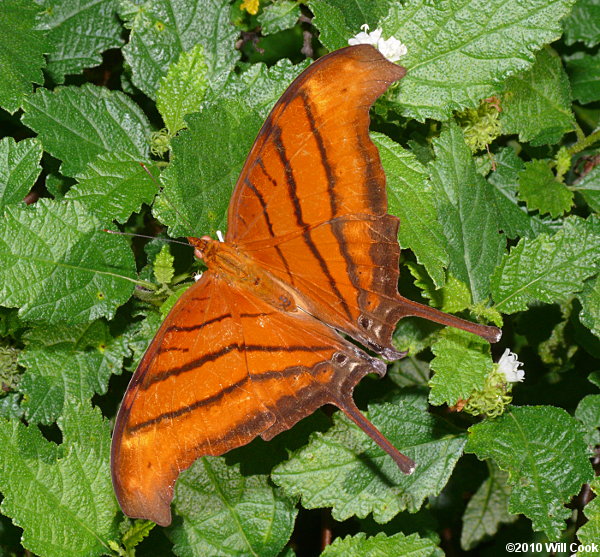
| Ruddy Daggerwing (Marpesia petreus) |
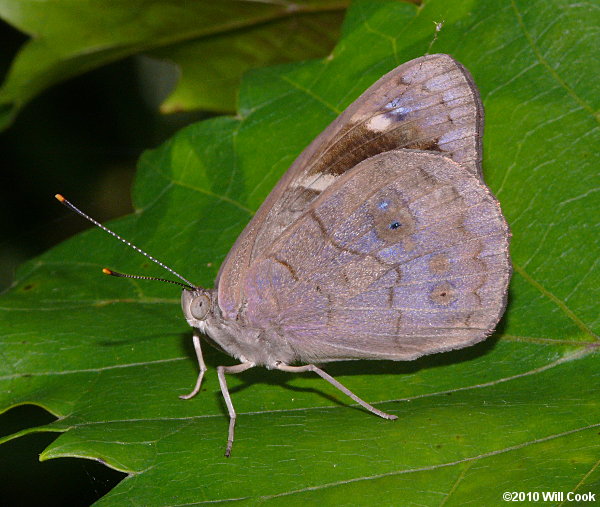
| Dingy Purplewing (Eunica monima) Dingy Purplewing inhabits the interiors of shady hammocks, but occasionally comes to the sunny edges, like the one photographed here. More photos of Dingy Purplewing. |
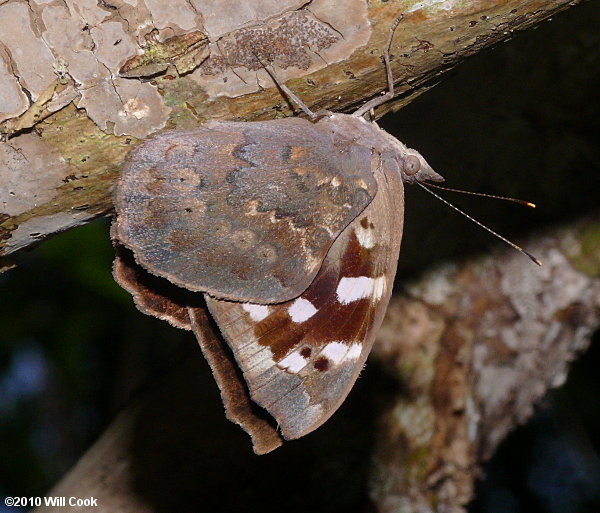
| Florida Purplewing (Eunica tatila) Florida Purplewing also inhabits the interiors of shady hammocks; you generally have to feed a lot of mosquitoes and deerflies to see one. The lavender tinge is brought out by the camera's flash - it isn't very noticeable under ambient lighting. More photos of Florida Purplewing. |
Papilionidae and Pieridae | Lycaenidae | Nymphalidae | Hesperiidae | Moths
Comments? Questions? E-mail me at cwcook@duke.edu